📋 Article Overview
Loneliness as a Biological Signal
Neuroscientist John Cacioppo, who spent decades studying loneliness, described it not as an emotional failing but as a biological signal — as fundamental as hunger or thirst. Just as hunger signals that your body needs fuel, loneliness signals that your social needs aren't being met. It evolved because humans who stayed connected to their group survived; isolated individuals faced mortal threats alone.
Understanding this reframes loneliness entirely. It's not a sign that something is wrong with you — it's your nervous system doing its job, alerting you to a real biological need.
The Health Consequences of Chronic Loneliness
Chronic loneliness — loneliness that persists over months or years — has measurable physical effects. Research links it to increased cortisol, disrupted sleep, weakened immune function, and elevated inflammatory markers. Former US Surgeon General Vivek Murthy declared loneliness a public health crisis in 2023, noting that its health impact is comparable to smoking 15 cigarettes a day.
The brain also responds differently under chronic social isolation: threat detection heightens, trust decreases, and social interactions that should feel rewarding become increasingly anxiety-provoking — creating a cycle that makes isolation self-reinforcing.
It's Not About Quantity — It's About Quality
One of the most consistent findings in loneliness research is that the number of social interactions matters far less than their quality. People can feel deeply lonely in crowds, at parties, or surrounded by acquaintances. And they can feel genuinely connected after a single substantive conversation with one person.
What matters is the experience of being seen, understood, and valued. Surface-level contact — pleasant but shallow — doesn't address the underlying need. This is why being constantly socially busy doesn't automatically protect against loneliness, while one real conversation often does.
What the Research Says Actually Helps
- Initiating contact: Lonely people often wait for others to reach out. Research consistently shows that initiating — despite the vulnerability it requires — reduces loneliness faster than waiting.
- Deepening existing connections: Investing in the relationships you have tends to be more effective than seeking new ones. Quality over novelty.
- Volunteering and purpose-driven activity: Contributing to something larger than yourself, especially with others, reliably reduces loneliness.
- Addressing the cognitive component: Chronic loneliness distorts social perception — making neutral interactions feel threatening. Recognising and questioning this distortion is part of recovery.
Where Online Connection Fits In
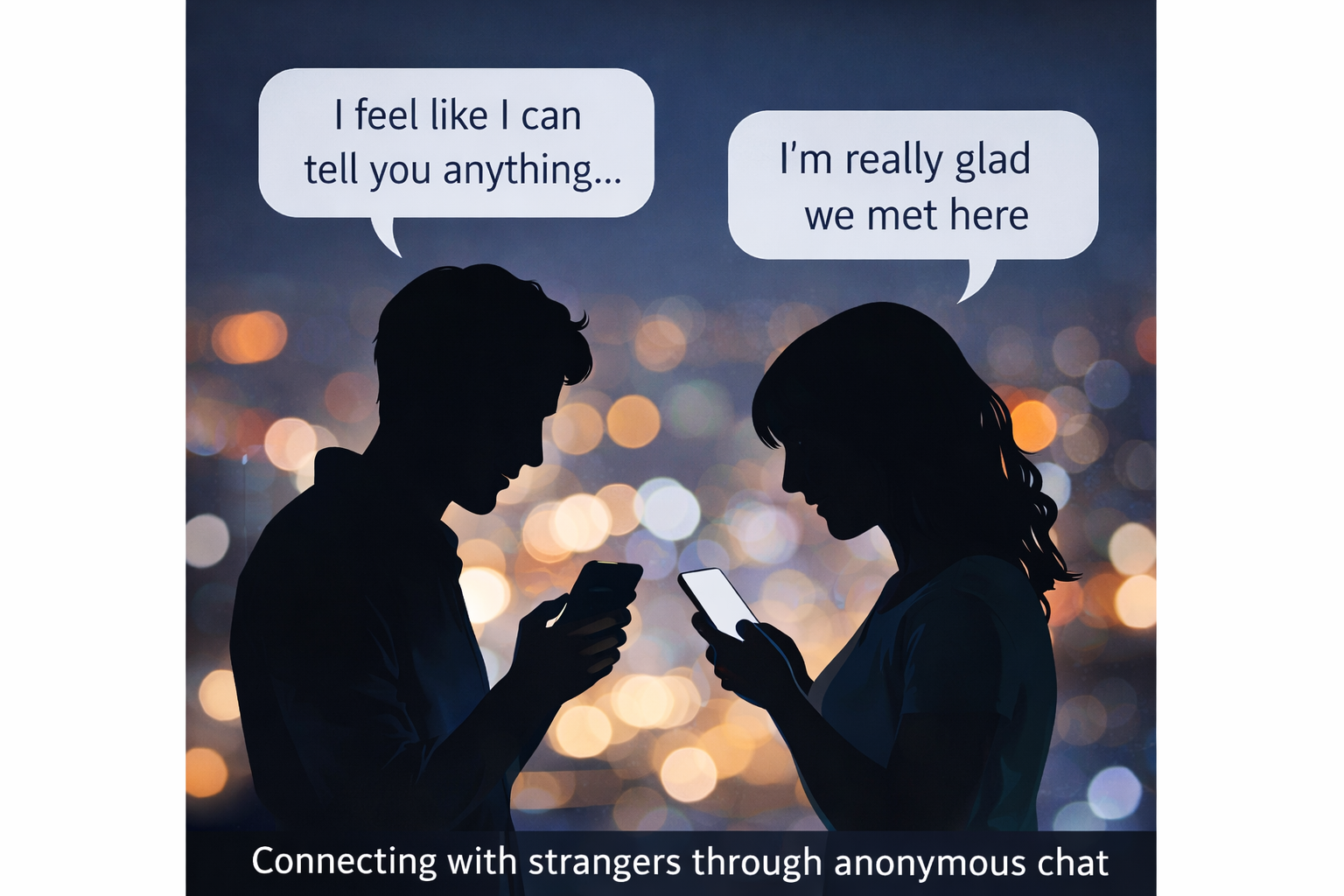
Research on online interaction and loneliness is nuanced. Passive consumption — scrolling, watching — tends to worsen loneliness. Active engagement — conversation, mutual disclosure, genuine interaction — can meaningfully reduce it. The medium matters less than the quality of the interaction. A genuine exchange with a stranger online that leaves you feeling understood provides something real that addresses the biological need loneliness represents.